 |
Benjamin Franklin Keller (I7625)
Hit Count:  
|
|
||||||||||||||
|
|
||||||||||||||||

Personal Facts and Details
  Events of close relatives Events of close relatives | |
| Birth | 1838  22 22 27 Franklin,Montour, Pa 27 Franklin,Montour, Pa |
| Death | 24 July 1863 (Age 25) battlefield near the Rappahannock River |
| Universal Identifier | B4E2F623CF89D511973400E02931A951EC99 |
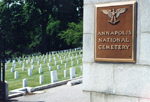
| Burial | section G grave 2397,Annapolis National Cemetery, Annapolis Md |
| Last Change | 14 December 2006 - 11:18:18 Last changed by: dcoplien |
Notes
 Note |
1850 census - Franklin, Montour PA (Montour was formed from Columbia County in 1850) 1860 census - Lausanne, Carbon, Pennsylvania KELLER, BENJAMIN DATE OF DEATH: 07/24/1863 BURIED AT: SECTION G SITE 2397 ANNAPOLIS NATIONAL CEMETERY 800 WEST STREET ANNAPOLIS , MD 21401 (410) 644-9696 Annapolis National Cemetery is located in Anne Arundel County, within the city limits of Annapolis, Md. Annapolis was one of the 14 national cemeteries established by President Abraham Lincoln in 1862. The original land was leased in Aug. 1862 from a local resident, Nicholas Brewer, for a period of 99 years. Five years later, Brewer’s heirs sold the land outright to the federal government. During the Civil War, Annapolis was the site of a Union training and recruiting center. Despite the government’s best efforts to keep the camps sanitary, a large number of men died due to illnesses such as small pox and typhoid, as well as accidents and violence. As a result, most original interments at the cemetery were men who died at the training camps or nearby hospitals. Annapolis also had a role in the exchange of prisoners between Union and Confederate sides. As early as the War of 1812, there was a well-established practice of paroling prisoners of war so neither side incurred the expense of holding and maintaining the others’ troops for an extended period. While City Point, Va., was the official exchange location, Confederate prisoners were held at Annapolis while arrangements were negotiated. Conversely, Union soldiers held by the Confederacy were often moved to the hospital at Camp Parole, near Annapolis, after their release. At least 24 men buried at Annapolis National Cemetery were former Confederate POWs who died in captivity. Annapolis National Cemetery was placed on the National Register of Historic Places in 1996. Name: Benjamin Keller , Enlistment Date: 12 November 1862 Distinguished Service: DISTINGUISHED SERVICE Side Served: Union State Served: Pennsylvania Unit Numbers: 2160 2160 Service Record: Enlisted as a Private on 12 November 1862 Enlisted in Company I, 167th Infantry Regiment Pennsylvania on 12 November 1862. Died Company I, 167th Infantry Regiment Pennsylvania on 24 July 1863 in Annapolis, MD Regimental History PENNSYLVANIA ONE HUNDRED and SIXTY-SEVENTH INFANTRY (Nine Months) One Hundred and Sixty-seventh Infantry. - Cols., Charles A. Knoderer, Joseph De Puy Davis; Lieut.-Cols., Joseph De Puy Davis Gustav A. Worth; Majs., Gustav A. Worth, Jonathan Lee. Charles A. Knoderer was selected to organize the 167th Pennsylvania Regiment. Knoderer was a German born immigrant who had attended the Polytechnic School of Karlesruhe where he studied engineering. He had served as a captain in the Baden Revolution in Germany. He later came to the United States and settled in Berks County where he worked as an assistant engineer for the Schuylkill Navigation Company. When the Civil War began, he served as a captain on the staff of General Frantz Sigel during General John C. Freemont's Missouri campaign. At the close of this campaign, he returned to his job with the Schuylkill Navigation Company. Muskets and cartridge boxes arrived on 4 December. Clothing had arrived shortly before. The 167th Regiment left Camp Terrill on 11 December 1862, when it was ordered to Washington, D.C. for active service. The newspaper account read, ' 'They moved into town byway of 5th street, preceded by the City Coronet Band, and with their knapsacks slung and muskets and bayonets gleaming in the sunlight presented a gallant sight. After marching through the principal streets, they took the [railroad] cars for Washington via Harrisburg about 5 p.m. carrying with them the good wishes of thousands of friends and relatives who witnessed their departure.' ' The regiment traveled to Harrisburg on the Lebanon Valley Railroad, arriving there about 1 a.m. They left Harrisburg in the same railroad cars and arrived in Baltimore about 10 a.m. Here they were given dinner by the Union Refreshment Association. At 6 p.m., they boarded cars of the Washington Branch Railroad. Some of these cars were in very poor condition. The 39 mile trip took 7 hours. The newspaper reports, ' 'The Regiment arrived in Washington about 1 A.M., and no lodging being provided for the men, they enjoyed the privilege of spending the balance of a cold night under the blue blanket of Heaven, without a sufficiency of boards or aught to lie upon; the accommodating Rail Road officers throwing them out of the poor shelter of the cars immediately upon arrival.' ' By 10 a.m., they were housed in the barracks just vacated by the 12th New Jersey Regiment. The following day, the remaining 2 companies left Reading to be assigned to another regiment and Camp Terrill went out of existence. From Washington, the 167th Regiment was sent to Suffolk to be under the command of General Peck. On 22 September 1862, General John J. Peck was ordered to Suffolk with about 9,000 men to repel the advance of 5,000 men under General A Pettigrew and French who were coming from the area of the Blackwater River. The town of Suffolk had been previously captured on 12 May 1862 by Colonel Charles C Dodge's First New York Mounted Rifles. General Peck had commanded a division of the Fourth Army Corps in McClellan's Peninsular Campaign. This divisions remained behind to occupy the area around Hampton Roads when McClellan's Army of the Potomac was withdrawn. Suffolk was chosen because it covered the approach to the mouth of the James River, and hence to the Union-held cities of Portsmouth and Norfolk, to the north of the Dismal Swamp. There were also several rail lines that converged there. These railways ran to Petersburg, Portsmouth, and Norfolk, Virginia, and to Weldon, North Carolina. General Peck was charged with holding the line south of the James River, covering the approaches to Portsmouth and Norfolk. General Peck's command was apart of the Department of the James under the command of General Dix. On 25 September 1862, the construction of fortifications around Suffolk commenced, and when the 167th arrived, they assisted in this project. Colonel Knoderer received a commendation from his superiors for the excellent defenses that he and his men erected. Such activity alarmed the Confederates who believed this was to be the base for an attack on Richmond. In response they fortified the entire length of the Blackwater River as well as Cypress Swamp and the Chipoak River. This fortification line ended at the James River near Fort Powhatan. Confederate General Roger A. Prior would frequently cross the Blackwater to reconnoiter and forage for supplies. He would retreat back to the town of Franklin at the first sign of Union movement. On 28 January 1863, General Prior had crossed the Blackwater River with 3 regiments of infantry and 14 pieces of artillery. The 167th was first exposed to enemy fire at the end of January of 1863. On 29 January, at 11 p.m. the regiment was ordered to prepare for a march at midnight. They were to take 44 rounds of ammunition and 2 days rations. The pickets were recalled and at midnight they moved out under the command of Brigadier General Corcoran, General Peck's second in command, along with the 11th Pennsylvania Cavalry, a field battery of 15 pieces, the 130th New York, the 13th Indiana, a part of the 6th Massachusetts, the 69th New York, and the 155th New York. They proceeded west on the Blackwater Road (also known as Poor House Road) toward Carrsville. (This road today is Indian Trail.) At some places the road was covered by knee deep water which the troops needed to wade through. After about 7 miles, they encountered the Confederate pickets. The cavalry skirmished with the pickets for an additional 3 miles where they encountered the main body of Confederates near a place called Deserted Farm or Deserted House. The Confederates referred to this location as Kelly's Store. Although General Prior had been caught unawares, he was certainly prepared for a fight. The battlefield selected by General Prior was a 200 acre oblong field surrounded on all sides by dense pine forest. The Blackwater Road crossed the field across its shorter dimension. (The battlefield is located on Indian Trail between Milford Lane and Buckliorn Drive.) The Confederates opened fire with the 14 cannon. The Union battery got into position. The two batteries were now facing each other 600 to 700 yards apart across a field that was empty except for a few apple trees. Behind each battery was a pine forest. The road through the forest on the Union side was straight for about 1 1/2 miles and the Union forces continued to move along the road, filing right and left at the edge of the woods to positions behind the artillery. Apparently this was not what the Confederates expected them to do. They expected them to march through the forest on either side of the road so that is where they concentrated their fire. The 130th, 13th and 6th were almost in position when the Union cannon began to fire. The flash from these big guns revealed that other regiments were still coming up the road and the Confederates now concentrated their fire on the road. When the front of the 167th Regiment was about 50 to 100 yards from the battery, a halt was ordered and the regiment was commanded to lie down along the side of the road. This order came just in time, for the Confederates had concentrated their fire on that location and many men would have been hit if they were not lying down. In a letter to the Berks and Schuylkill Journal, one of the men described the night in the following way: ' 'The scene at this time was remarkably interesting. The moon shone brightly and all nature - the broad fields and the vernal woods - seemed tricked out in an unusually gauzy mystery of enchantment, strange peculiarities and oddities of every kind, of course imaginary ones. Colonel Knoderer continued to ride up and down the line, encouraging his men. When he was in the front and to the left of the regiment, his horse was hit by a shell and killed. The explosion tore away the colonel's left hip, severed an artery, and left him with a deep wound in his side. Lieutenant-Colonel Davis' horse was also killed beneath him, and he was badly bruised and incapacitated for a while. Major Worth rode forth amid the severe fire and ordered the regiment forward. No sooner had the men risen than General Corcoran decided against an advance and ordered them to lie down again. Soon after this order, the Major's horse was killed. One of the Union cannon was disabled and taken to the rear. Some cavalrymen passed back and 2 companies of the 6th Massachusetts who could no longer remain in their position moved to the rear. Some of the men of the 167th mistook this as a sign of defeat and began to retreat. Both the New York Tribune and the Daily Times reported this action as an act of cowardice. The Tribune reported, ' 'Shame to record it, the 167th Regiment Pennsylvania Militia - drafted men - were not equal to the emergency. Like the veriest cravens that ever cursed a noble cause, nearly every man of this regiment skulked, and all were as deaf to the call of their commanding general as they were insensible to the demands of patriotism and the ordinary dictates of manhood. ' 'The delay occasioned by the supineness of the Pennsylvania regiment lost us the golden opportunity to capture a large portion of the enemy's cannon and many prisoners.' ' The commanding generals, however, did not share this opinion and absolved the regiment from blame as can be seen in the 4 February 1863 official report of Major General John J. Peck, based largely on Brigadier General Corcoran's report. ' 'General Corcoran ordered the infantry to advance at 5:15 a.m., but the order was not promptly executed, although given more than once. He says the One hundred and sixty seventh Pennsylvania became a confused mass, mixed up with other regiments, and filled up the entire road, leaving it impassable and creating a temporary confusion among some other regiments in the rear. At the request of the lieutenant colonel Joseph DePuy Davis] it was sent to the rear to restore confidence and reform. ' 'The demoralization of the One hundred and sixty seventh Pennsylvania, already spoken of, undoubtedly arose from a complication of unfavorable circumstances rather than any determination to disobey orders. It had never been under fire, its position at the head of the column near the artillery (exposed to the enemy's fire for near two hours in darkness without being engaged),and the fact that the colonel [Knoderer], was desperately wounded and the lieutenant-colonel [Davis] and major [Worth] unhorsed were considerations well calculated to create temporary confusion. From this it recovered, and no complaint was made during the subsequent operations. This regiment should avail itself of the earliest opportunity to wipe out any suspicion that may be attached to its conduct at the Deserted House.' ' A 15-year-old regimental drummer boy, named Arthur, was indignant over the accusations of cowardice and wrote home to his mother: ' 'I am very sorry such false reports are raised about our Regiment. . . I was eager to get into battle, and just as eager to get out of it; but am glad to say did not skedaddle. .. It is a very likely story to say that our Regiment skedaddled. When we first started the New Yorkers were ahead of us, and when we got into the battle we were ahead of them. They want to have all the honor to themselves and don't want anyone else to have any at all... The pickets took the skedaddlers and put them in jail. They had about 20 of our men, a good many out of other Regiments, some of the New Yorkers of course with the rest.' ' During the confusion of the retreat, men from various regiments became mixed together. The moon had set and it was too dark in the pine forest to regroup. Summing up the Deserted House battle there were 134 Union casualties, while the Confederates had only 39. All but one of the 167th regiment officers' horses were killed, although Colonel Knoderer was the only one in the all-Berks regiment to be seriously wounded. Seven other men in the regiment received wounds. The colonel was carried on a stretcher back to Suffolk. Private Jeremiah Boyer of Earlville, was one of the litter-bearers and he wrote home that the colonel was in considerable pain. Colonel Knoderer died of his wounds about 2 weeks later. His body was returned to Reading and buried in Charles Evans Cemetery. Lieutenant Colonel Joseph DePuy Davis became the commanding officer of the 167th and was later promoted to full Colonel. About 26 February 1863, the Confederate General Longstreet was detached from Lee's army and placed in command of the Department of Virginia and North Carolina with headquarters at Petersburg, Virginia. Of his corps, 12,000 men were positioned along the Blackwater River and another 12,000 near the railroad between Petersburg and the Blackwater River. Longstreet was assigned 3 tasks: 1) to protect the Confederate capital, Richmond, 2) to gather food and clothing to be sent back to Lee's troops, and 3) to be ready to move back to the Rappahannock River if Lee needed him. He conceived a plan whereby he would attack the Union lines at 3 points: New Bern and Washington in North Carolina and Suffolk in Virginia. He hoped the Union forces would retreat to their fortifications. As he held them there, foraging teams behind his lines would be buying food and clothing from this area that had been held by the Union for almost a year. At the time of Longstreet's arrival, he had 44,193 men while the Union had 50,995. Of course, the Berks men of the 167th regiment knew nothing of such planning. In a letter dated 5 April 1863 to the editor of the Berks and Schuylkill Journal, a Reading newspaper, Private Isaac Cleaver of Company C writes, ' 'We have now been lying at this place [Suffolk] nearly 4 months, all of which time has been devoted to drill, until from raw militia men, the regiment has been transformed into disciplined troops. A few weeks ago we exchanged our old smooth bore muskets, some of which bore the incient [sic] date 1832, for new long ranged English Rifles. The boys were in high glee over the good fortune.' ' ' 'Our Regiment thus far has been very healthy, there being but few cases of sickness in the Hospital and but very few died since we are in service.' ' Another letter, signed only ' 'One of the 167th' ', dated 6 April 1863, reads, ' 'The 1st of April was the happiest day of the year in this camp. About noon the paymaster and his money chest made their appearance. The good news spread rapidly among the men, not a few regarding it as a 'fool's day' catch.' ' ' 'The men generally received $54.60 each, and of this not a few, indeed so far as I know, nearly all, has sent $50 [home], keeping but $4.60 for personal use.' ' A private's pay was $13 per month. Apparently the regiment had not been paid since they left Berks County since this amount was over 4 month's pay. On 14 March, some of Longstreet's troops, under Generals Hill and Pettigrew, moved against New Bern and on 30 March against Washington, North Carolina. The siege of Washington, North Carolina lasted until 16 April. It was hoped that these actions would cause troops to be sent from their positions in southern Virginia, especially Norfolk and Fort Monroe. This maneuver was successful, since on 10 April 1863, General Peck was ordered to send a ' 'considerable portion ' 'of his force to Major General John G. Foster in Washington, North Carolina. On 9 April, the 167th and their brigade were ordered to North Carolina to assist General Foster. One of the men of the regiment reported to the newspaper, ' 'We had broken camp and just finished getting aboard the cars, bag and baggage for Norfolk, when the order was countermanded, and we were ordered back to our old camping ground. But alas! our tent-floors were gone, and our boxes (converted into cupboards) had disappeared. Our men were not much pleased to be ordered back, and were a good deal displeased to find their little comforts non est. But our return saved Suffolk.' ' Deserters from the Confederate Army had reported that troops were moving to the vicinity of the Blackwater River. A pontoon train had arrived from Petersburg and bridges were being constructed. This information forewarned the Union forces of the coming attack. On 9 April, Longstreet marched southeastward in the direction of the lower Blackwater River crossings, then toward Suffolk. The advancing Confederates had 21,108 men and the Union defenders numbered 20,192. Peck, however, estimated the Confederate strength at 40,000 to 60,000 and retreated behind the fortifications at Suffolk. Longstreet continued the siege while his commissary officers bought all the food and clothing they could find. During the siege an additional 9,000 Union soldiers arrived in Suffolk from Hampton Roads. On 11 April, at 5 p.m., a long drum roll mustered the 167th and in less than 10 minutes they were marching double time to the western front. Four companies under Major Jonathan See went to Fort Rozencrans and the redan (a V shaped work projecting from a fortified line) nearby. The other 6 occupied the rifle pits for a short time, then they were ordered to Drawbridge Battery (or Fort Peck as it was sometimes called). After nightfall, companies D, F, H, and I were ordered to a place between Drawbridge Battery and Fort Rozencrans where they labored 3 days and nights to build fortifications and tear down old houses that might obstruct their line of fire. Companies E, G, and K remained at Fort Rozencrans and were fired upon by Confederate sharpshooters. On 15 April Longstreet recalled, to Suffolk, his men from Little Washington, and the remainder of his men soon thereafter. For many days the bombardment of Suffolk was almost continuous, but the fortifications and defenders held. On 17 April 1863, Longstreet wrote to the Confederate Secretary of War, ' 'I am very well convinced that we could reduce it [Suffolk] in two or three days, but I doubt if we can afford to expend the powder and ball. To take it by assault would cost us three thousand men. .. The principal object of the expedition was to draw out supplies for our army. I shall confine myself to this unless I find a fair opportunity for something more.' ' On 30 April, Longstreet received orders to move without delay to support Lee. Union Genera/Hooker was massing great strength at Fredericksburg. Longstreet withdrew from his siege the night of 3 May, and his entire command had crossed the Blackwater River by sundown on 4 May. During the siege, Longstreet had constructed 8 to 13 miles of covered ways, rifle pits and fieldworks. He lost his 6-gun Fauquier Battery and about 2,000 men. The Union line consisted of 20 forts and redans connected by a continuous line of rifle pits and breastworks and was about 14 miles in length. On 13 May, the 167th Regiment along with seven other regiments all under the command of General Foster were sent to tear up the rails of the Roanoke and Seaboard Railroad west of Suffolk. They met with some enemy opposition near Carrsville. Second Lieutenant Thomas Gordon Miller, an officer in Company E, related what happened on 16 May: ' 'Co. E, of the 167th constituted the advanced picket, and for an hour during the morning it was exposed to the fire of about 1,500 rebel infantry. The men of Co. E acted well on this occasion, they delivered a calm, steady fire, and fired 50 rounds of cartridges per man. After the action had lasted three-quarters of an hour our artillery began to open, and in fifteen minutes more the 165th Penna. was sent as a reinforcement to Co. E.' ' The 69th New York Regiment later joined them. Two members of Company F were wounded, but not seriously. During Lee's invasion of Pennsylvania, during the end of June, the regiment was a part of a command sent to move toward Richmond. Apparently the purpose was to make the Confederates think their capital was being attacked. This would cause them to withdraw troops from other areas to defend the capital. After their return from this mission, they were sent to join the Army of the Potomac, that was then pursuing the retreating Lee's army in Maryland after its defeat at Gettysburg. They joined the Army of the Potomac, close to Hagerstown, Maryland, on 15 July, the day after the Confederates had crossed the Potomac. They were assigned to the 1st Brigade of the 1st Division of the 1st Corps. At this time, 2OJuly, the Union Army of the Potomac under the command of General Meade had about 105,623 while General Lee had only 50,178. With these odds, Lee had little choice but to continue his retreat. Lee had crossed the Potomac River at Falling Waters. He then proceeded down the valley between the Blue Ridge Mountains and the Shenandoah Mountains, crossed through the Blue Ridge Mountains via the Chester Gap near the town of Front Royal and reached Culpepper on 23 July 1863. On 17 18, 19 July, the Army of the Potomac crossed the Potomac River. The crossing was made at 2 points, Harper's Ferry and Berlin, about 6 miles downstream. Meade headed south in the valley to the east of the Blue Ridge Mountains toward Warrenton. From Warrenton, Meade sent a cavalry and infantry column across the Rappahannock River on 31 July. Lee resisted this movement but knew he could not stop it and by 4 August he had retreated beyond the Rapidan River, ending the 60 days of the Gettysburg campaign. Both armies were back at their approximate starting points and Meade did not pursue. The 167th participated in the pursuit of Lee to beyond the Rappahannock. Since their 9-month term of service was almost at an end, they were ordered back to Reading. On 7 August, a dispatch was received from Colonel Davis in Washington, D.C., stating that the 167th was on its way by railroad to Harrisburg. On the afternoon of Saturday 8 August, they returned to Reading and were met at the upper depot (near where later would be the outer station) by a battalion of volunteer militia under the command of Major Ellis from Camp Muhlenberg, and escorted to Lauer's Park. Here they were treated to refreshments, prepared on short notice by brewer Frederick Lauer and committee. They were welcomed by Congressman S.F. Ancona. Colonel Davis made some brief remarks and the regiment was invited into a large building attached to the park. They celebrated through the entire night at Lauer's Park and on Sunday, 9 August, they marched to Camp Muhlenberg. Here they took up quarters until 12 August when they were paid and mustered out of the service. Camp Muhlenberg, named in honor of General Peter Muhlenberg, was located south of present day Perkiomen Avenue in the vicinity of 19th Street. It had been established in the spring of 1863 during the Confederate invasion of Pennsylvania to receive troops enroute to Harrisburg to counter the invasion. At this time, the camp was about a mile outside the city limits on the farm of Michael Haak. Heiner's spring provided drinking water, and a pond on the Rose Valley Creek could be used for bathing. As they had not been paid since April, each man received a very handsome sum. The payroll was estimated at $100,000. On 12 August 1863, the regiment was mustered out. General Cutler, the commander of the 1st Division of the 1st Corps, wrote the following to Colonel Davis: ' 'As you are about leaving the service with your command, I desire to express to you, and through you to your command, my entire approval of the manner in which they have discharged their duty as soldiers since they joined this division. The regiment has been a pattern of order and promptness on the fatiguing marches of the last month. Wishing you and them a safe and pleasant return to your homes and friends, I am, very truly yours.' ' Regiment lost 1 Officer and 1 Enlisted man killed and 22 Enlisted men by disease Source: The Union Army, vol. 1 Battles Fought Fought at Port Onandagua, VA. Fought on 30 January 1863 at Deserted House, VA Fought on 16 April 1863 at Carrsville, VA. Fought on 19 April 1863 at Fort Rosecrans, VA. Fought on 16 May 1863 at Carrsville, VA. Fought on 01 July 1863 at Gettysburg, PA. Pursuit of Lee beyond the Rappahannock July 15-24 Fought on 18 July 1863. |
Media
 Multimedia Object | Annapolis National Cemetery, Annapolis Maryland
Format: jpg Image Dimensions: 500 x 341 Type: photo |
 |
Family with Parents - [View Family (F21)] |


Research Assistant
| There are no research logs attached to this individual. |