 |
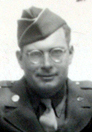
Pvt. Bernard A Nyman (I43302)
Besucher:   
|
|
||||||||||||||
|
|
||||||||||||||||

Persönliche Fakten und Details
  Verwandtschafts-Ereignisse Verwandtschafts-Ereignisse | |
| Geburt | 1918  28 28 25 Spring Grove, Green, Wi 25 Spring Grove, Green, Wi |
| Tod der Mutter | 1. Mai 1936 (Alter 18) Lola A Zimmerman (I35433) (Alter 43) - [Verwandtschaftsberechnung] |
| Hochzeit des Vaters | 11. März 1939 (Alter 21) Bernhardt C Nyman (I43303) (Alter 48) - [Verwandtschaftsberechnung] Dora Dudley (I44911) (Alter 51) - [Verwandtschaftsberechnung] [Familie zeigen (F19444)] |
| Tod | 3. Januar 1945 (Alter 27) Between Herbitzheim Bas-Rhin France and Munchof Rhineland Germany |
| Universelle Identifikationsnummer (UID) | D693C176AE22E34CA91245EEA74B36A05544 |
| Beerdigung | Epinal American Cemetery, Epinal, France,Plot B Row 30 Grave 30 |
| Letzte Änderung | 3. Januar 2007 - 21:23:08 Zuletzt geändert von: dcoplien |
Bemerkungen
 Anmerkung |
Name: Bernard A Nyman Death: Jan 03 1945 - buried Epimal, France Military: Illinois, WWII Purple Heart Medal 71st Infantry 44th Division Service: U.S. Army - Service ID: 36901553 Campaigns Northern France Rhineland Central Europe The war in Europe ended May 8 1945, 4 months after Bernard died. --- 44th Infantry Division in World War II Activated: 16 September 1940. Overseas: 5 September 1944. Campaigns: Northern France, Rhineland, Central Europe. Days of combat: 190. Distinguished Unit Citations: 3. Awards: MH-1; DSC-38; DSM-2; SS-464; LM-8; SM-6; BSM-2,647; AM-110. Commanders: Maj. Gen. Clifford R. Powell (September 1940-August 1941), Maj. Gen. James I. Muir (August 1941-August 1944), Maj. Gen. Robert L. Spragins (August 1944-December 1944), Maj. Gen. William F. Dean (January 1945-September 1945), Brig. Gen. William A. Beiderlinden (1 November-14 November 1945), Brig. Gen. Robert L. Dulaney (November 1945 to inactivation). Returned to U.S.: 21 July 1945. Inactivated: 30 November 1945. Combat Chronicle The 44th Infantry Division landed in France via Cherbourg, 15 September 1944, and trained for a month before entering combat, 18 October 1944, when it relieved the 79th Division in the vicinity of Foret de Parroy, east of Luneville, France, to take part in the Seventh Army drive to secure several passes in the Vosges Mountains. Within 6 days, the Division was hit by a heavy German counterattack, 25-26 October. The attack was repulsed and the 44th continued its active defense. On 13 November 1944, it jumped off in an attack northeast, forcing a passage through the Vosges Mountains east of Leintrey to Dossenheim, took Avricourt, 17 November, and pushed on to liberate Strasbourg, along with the 2nd French Armored Division. After regrouping, the Division returned to the attack, taking Ratzwiller and entering the Ensemble de Bitche in the Maginot Line. Fort Simserhof fell 19 December. Displacing to defensive positions east of Sarreguemines, 21-23 December, the 44th threw back three attempted crossings by the enemy of the Blies River. An aggressive defense of the Sarreguemines area was continued throughout February 1945 and most of March. Moving across the Rhine at Worms, 26 March, in the wake of the 3rd Division, the 44th relieved the 3rd, 26-27 March, and crossed the Neckar River to attack and capture Mannheim, 28-29 March. Shifting to the west bank of the Main, the Division crossed that river at Grosse Auheim in early April, and engaged in a 3-week training period. Attacking 18 April, after the 10th Armored Division, the 44th took Ehingen, 23 April, crossed the Danube, and attacking southeast, took Fussen, Berg, and Wertach, in a drive on Imst. Pursuing the disintegrating enemy through Fern Pass and into Inn Valley, the 44th set up its CP at Imst, Austria, on 4 May. Landeck surrendered on the 5th. Meanwhile, the 19th German Army had surrendered at Innsbruck, and the war was over for the 44th. After a short period of occupation duty, the Division returned to the United States in July 1945 for retraining prior to redeployment, but the end of the Pacific war resulted in inactivation in November. Assignments in the ETO 30 August 1944: Ninth Army, 12th Army Group. // 5 September 1944: III Corps. // 10 October 1944: Ninth Army, 12th Army Group. // 14 October 1944: XV Corps, 6th Army Group, for supply. // 17 October 1944: XV Corps, Seventh Army, 6th Army Group. // 8 April 1945: Seventh Army, 6th Army Group. // 15 April 1945: XXI Corps. // 17 April 1945: VI Corps. General Slogan: Prepared in all things. Shoulder patch: A blue-bordered orange circle containing two blue Arabic 4's, back to back. Publications: History of the 44th Division; by Lt. Col. Edward Boherty, unit historian; Albert Love Enterprises, Atlanta, Ga.; 1947. --- The World War II Epinal American Cemetery and Memorial is located approximately four miles southeast of Epinal (Vosges), France on Road D-157 in the village of Dinoze-Quequement. It can be reached by automobile via toll Autoroute A-4 eastward to the Nancy Exit. Take Highway N-57 and exit at Arches-Dinoze. Rail service is available from Gare de l'Est, Paris via Nancy, where it may be necessary to change trains. The journey by train takes about five hours. Air travel is available from Paris to the Epinal-Mirecourt Airport. Travel by air takes forty-five minutes. Adequate hotel accommodations and taxi service can be found in Epinal and vicinity. The cemetery, 48 acres in extent, is located on a plateau one hundred feet above the Moselle River in the foothills of the Vosges Mountains. It contains the graves of 5,255 American military Dead. It was established in October 1944 by the 46th Quartermaster Graves Registration Company of the U.S. Seventh Army as it drove northward from southern France through the Rhone Valley into Germany. The cemetery became the repository for the fatalities in the bitter fighting through the Heasbourg Gap during the winter of 1944-45. The memorial, a rectangular structure with two large bas-relief panels, consist of a chapel, portico and museum room with its mosaic operations map. On the walls of the Court of Honor, which surround the memorial, are inscribed the names of 424 Americans who gave their lives in the service of their country and who rest in unknown graves. Stretching northward is a wide tree-lined mall that separates two large burial plots. At the northern end of the mall the circular flagpole plaza forms an overlook affording a view of a wide sweep of the Moselle valley. On May 12, 1958, thirteen caskets draped with American flags were placed side by side at the memorial at Epinal American Cemetery. Each casket contained the remains of one World War II "Unknown" American serviceman; one from each of the thirteen permanent American military cemeteries in the European Theater of Operations. In a solemn ceremony, General Edward J. O'Neill, Commanding General of the U.S. Army Communication Zone, Europe, selected the "Unknown" to represent the European Theater. It was flown to Naples, Italy and placed with "Unknowns" from the Atlantic and Pacific Theaters of Operation aboard the USS Blandy for transportation to Washington, D.C. for final selection of the "Unknown" from World War II. On Memorial Day, 1958, this "Unknown" was buried alongside the "Unknown" from World War I at the Tomb of the Unknown Soldier at Arlington National Cemetery. The Epinal cemetery is open daily to the public from 9:00 am to 5:00 pm except December 25 and January 1. It is open on host country holidays. When the cemetery is open to the public, a staff member is on duty in the Visitors’ Building to answer questions and escort relatives to grave and memorial sites. |
Multimedia
 Multimedia Objekt | 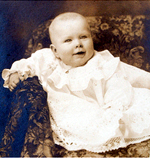 Pvt. Bernard Nyman Pvt. Bernard Nyman
Format: jpg Bildgröße: 449 x 491 Typ: photo |
Multimedia Objekt | Prvt. Bernard Nyman
Format: jpg Bildgröße: 450 x 462 Typ: photo Bemerkung: Killied WWII - Between Herbitzheim Bas-Rhin France and Munchof Rhineland Germany Buried Epinal American Cemetery, Epinal, France,Plot B Row 30 Grave 30 |
 |
Familiendaten als Kind - [Familie zeigen (F18908)] |


Forschungs-Assistent
| Zu dieser Person gibt es keine Forschung Protokolle. |