Victor Ostrander Zimmerman (I43259)
Hit Count:  
|
|
||||||||||||||
|
|
|||||||||||||||

Personal Facts and Details
  Events of close relatives Events of close relatives | |
| Birth | 2 May 1894  37 37 33 Spring Grove, Green, WI 33 Spring Grove, Green, WI |
| Death | 1918 (Age 24) France - WWI |
| Universal Identifier | BC9B04B2A3040D4DA6341C31E7EFCD875FE1 |
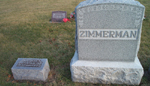
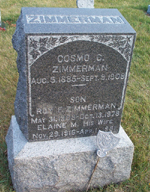
| Burial | memorial stone at Union Cem, Spring Grove, Green, WI |
| Last Change | 29 November 2006 - 15:45:34 |
Notes
 Note |
32nd Inf - Red Arrow Div. draft Reg - grey eyes, light hair Red Arrow Division; called "Les Terribles -- Arrived in France on 6 February 1918, the sixth division to join the A.E.F. Served six months in combat, from 18 May to 11 November 1918, with only 10 days in a rest area. First American troops to set foot on German soil – in Alsace in May 1918. Fought on five fronts in three major offensives – the Aisne-Marne, Oise-Aisne and Meuse-Argonne. Captured Fismes in the Marne offensive after an advance of 19 kilometers in seven days. Fought in the Oise-Aisne offensive as the only American unit in General Mangin’s famous Tenth French Army, breaking the German line which protected the Chemin des Dames. Twice in the line in the Meuse-Argonne offensive, fighting continuously for 20 days, penetrating the Kriemhilde Stellung, crossing the Meuse and starting drive to flank Metz. Fought and defeated 23 German Divisions, capturing 2,153 prisoners. Gained 38 kilometers in four attacks and repulsed every enemy counter attack. In action east of the Meuse when the Armistice was signed. Suffered nearly 14,000 casualties from all causes. Marched 300 kilometers to the Rhine for Army of Occupation duty as front line element of the Third U.S. Army. Occupied the center sector in the Coblenz bridge-head for four months, holding 63 towns and 400 square kilometers of territory. Over 800 officers and men decorated by American, French and Belgian governments, including 245 Distinguished Service Crosses. The colors of all four Infantry Regiments, three Artillery Regiments and three Machine Gun Battalions wear the Croix de Guerre With Palm of the Republic of France while every flag and standard in the Division has four American battle bands. The units of the 32nd Division which were awarded the Croix de Guerre With Palm were the only National Guard units bestowed with the highest order of the Croix de Guerre during WWI. Insignia is a Red Arrow, signifying that the Division shot through every line the enemy put before it. Awarded the nom-de-guerre of “Les Terribles” by the French. The 32nd Division was the only American division to be bestowed with a nom-de-guerre by an Allied nation during the war. Commanded in all its actions by Major General William G. Haan and in the Army of Occupation by Major General William Lassiter. Departed Europe for home in April 1919. Arrived in the United States and demobilized in May. -- The 32nd Division was created by combining the Michigan and Wisconsin National Guard. Wisconsin provided about 15,000 soldiers and Michigan provided 8,000. Later 4,000 National Army troops (selectees or draftees) from Wisconsin and Michigan were assigned to the Division before it left for France. Before being activated for World War I, the Michigan and Wisconsin National Guard were organized in accordance with pre-war US Regular Army units. At that time, the General Staff of the War Department envisioned "triangular" infantry brigades of three infantry regiments each, with three such brigades in a division (plus artillery, engineer, signal, supply and medical units). Each rifle company had 3 officers and 150 men. In the spring of 1917, however, General John 'Blackjack' Pershing (the commander of the A.E.F. in France) and his staff made a trip to France to observe the tactics and formations in use by the Allies. Based on his observations, Gen. Pershing decided that reorganizing US units into massive "square" divisions, also known as "Pershing Divisions", might be able to provide enough muscle to break the stalemate of trench warfare. Each "square" division was built around four powerful infantry regiments of 3,720 enlisted men each. There would be two such regiments, plus a machine gun battalion, in an infantry brigade (2 infantry brigades per division). Each infantry brigade would be supported by a regiment of light (75mm) artillery; a 3rd regiment (155mm howitzers) and a trench mortar battery would complete the division's brigade of artillery. All of this, plus an additional machine gun battalion, a combat engineer regiment, a signal battalion and a division train (consisting of military police, ammunition train, supply train, engineer train, sanitary train) gave each division an authorized strength of 991 officers and 27,114 men (each rifle company consisted of 7 officers and 250 men, pre-war rifle companies had 3 officers and 150 men). -- The 32nd Division was composed of two infantry brigades of two regiments each; and artillery brigade of three regiments, a trench mortar battery; and auxiliary troops including engineers, signal corps, ammunition and supply trains. The Michigan infantrymen were formed mostly in the 63rd Brigade. while the Wisconsin doughboys comprised the 64th Brigade. The old 31st, 32nd, and 33rd Michigan Guard Regiments became the 125th, 126th Infantry Regiments, US Army, and the 120th Machine Gun Battalion. The 1st, 2nd, and 3rd Wisconsin Guard Regiments became the 127th and 128th Infantry Regiments, U.S. Army and 121st Machine Gun Battalion. These regiments were direct descendants of Wisconsin regiments of the Iron Brigade. The first commanding general of the 32nd Division was an old regular, Major General James Parker, who left for France to study trench warfare methods at the outset of war. Consequently, the Division's senior brigadier general William George Haan, was reassigned as Major General. General Haan, too, came of the Iron Brigade stock. His birthplace was Indiana and soldiering was his profession. A member of West Point's class of 1889, Haan was commander of the Artillery Brigade of the Division before he became Division Command. General Parker never assumed command of the 32nd. When he returned to the US, he was transferred to the 85th Division at Camp Custer, Michigan. General Haan was officially enrolled as Division Commander in December 1917. His tough training program paid off. In December, when the 32nd Division was inspected the Army brass from the War Department, it was judged to be more advanced in its training than other divisions in the Army. The War Department told General Haan to get his command ready to move to France and promoted him to Major. January 1918 January and February, the Division were transported out of Waco, Texas to Camp Merritt, New Jersey, the next stop would be France. The crossing of the Atlantic was not entirely uneventful. The transport Tuscania was torpedoed by German submarines and 13 men lost their lives. The Division established its headquarters near Langres, France on Feb. 24 1918. The 32nd Division was in high spirits as they assembled in France but, in a matter of days, the Division's morale dropped to an all time low. The were told that the Michigan-Wisconsin Division had been assigned to establish a replacement depot for the I Corps. General Haan gathered his commanders and pointed out that it was the duty of every soldier to do whatever was best for the war effort. If the 32nd could help most by training and furnishing replacements, then that was the way it was going to be. In the meantime, Haan went to work quietly behind the scenes and had several stormy sessions with the AEF headquarters. By mid April, General Haan had won his point. General Pershing agreed to designate another division to the replacement depot and the 32nd was reestablish to the status as a combat division. May 1918 Although Britain and France had launched major offensives against the Germans in 1917, they had been unsuccessful in advancing through German lines, only sustaining heavy losses. On May 18th, 1918, four battalions of the 32nd division were assigned to front line duty in Haute Alsace, relieving French troops decimated by an enemy offensive. By June 15, 1918, they were deployed in the trenches along a 17 mile front from the Aspach le Bas to the Swiss border. In the division's baptism of fire, 40 men were killed. From the Alsace, the division went to the Marne district and pushed the Germans from the Ourcq River back to the Vesle River. The 32nd paid a terrible price in seven days of savage fighting for these 19 kilometers between the two rivers. From June through mid July 1918, however, the Division continued to hold the line of trenches from Aspach le Bas to the Rhine-Rhone Canal. Many Red Arrow units also engaged in numerous combat patrols into Germany itself. For this reason the 32nd Division could claim the distinction of being the first US troops to "set foot" on enemy soil in World War I. When it was over 722 soldiers were killed, 992 severely injured, 618 gassed, 46 missing; 75 of the wounded later died. Marshall had consumed Mustard gas during this skirmish which gave him life long respiratory ailments. Solders of the 32nd Division after consuming mustard gas JULY 1918 The 32nd Division soon moved into an assembly area near Chateau-Thierry in the old Marne salient and prepared for combat. The Division's movement toward the front began on July 27 1918, as the doughboys hit the road that leads from Paris to Metz. On July 28 1918, General Haan and his commanders moved up to study the positions of the 3rd Division and the nearby 28th. Two days later, the 32nd Division was in the battle line. It was a time when the fresh US troops were cracking open the concept of trench warfare, as it had been practiced on the battlefields of France since 1914. The Aisne-Marne offensive of mid-summer 1918 began as the Divisions first full scale battle. It began with an attack by the 64th Brigade in conjunction with neighboring elements of the 28th Division. They swept forward to seize the Bois de Grimpettes, a mile beyond Ronchere, where the relief of the 3rd Division had taken place. Division troops also took the Bois de Cierge. This was a far cry from the static trench warfare of the Division experienced in Alsace. The following day, the Wisconsin-Michigan men also took over the 28th. SEP 1918 On Sept. 13, 1918, former President Theodore Roosevelt wrote to Major General William Haan, "I most heartily congratulate you, my dear Sir, on the great work of your division. By George, your men have hit hard! Will you thank the division for me? " The unit won fame under three names: Officially it was the 32nd Division; to the people of Michigan and Wisconsin it was the Red Arrow Division, and to the French who fought alongside these mid-western Americans, they were known as "Les Terribles." From the Vesle, the division was sent to the Soissons front. There it came under the command of the renowned French Gen. Mangin, fighting between two of the best divisions in the French army -- the Moroccans and the Foreign Legion. Together they took Juvigny. In the five-day battle against five German divisions, the 32nd suffered 2,848 casualties. The Red Arrow moved on to the Verdun front and from there to the Argonne-Meuse sector. It was 11:30 a.m. on Sept. 30, 1918. They would now take part in an assault on the Hindenburg Line. The men of the 32nd Infantry Division, had taken up positions north of the Argonne Forest, France and fought hard. The heavily fortified ridge that was, realistically, Germany's last line of defense. The Germans were dug in deep, and planned to stay put. They realized the importance of the position and were under orders to hold the line at all costs. They didn't count on the ferocity of "Les Terribles." They held positions until Oct. 4th, when during the final assault, the town of Gesnes was captured.. The Allied advances during the last five days would cause Germany to send a letter to President Wilson, requesting armistice talks. The 32nd broke through the Hindenburg Line and moved on the Kriemhilde Stellung line. The day before, Haan had received word that a key position on the opposing line had been captured; a report that figured heavily in the plans for a large assault to take place the next morning. When it was discovered that the position had not been captured, Haan and his brigade commanders immediately began to plan. They would have to take it before the attack began. At 5:30 a.m. on Oct. 14, the Red Arrow broke through the maze of barbed wire and took the line of trenches and the Cote Dame de Marie, which was the key to all the defenses in the vicinity. For five more days the 32nd continued to advance under nearly constant machine gun and artillery fire. The 32nd Division met and vanquished 11 German divisions in the Argonne fighting, including the fearsome Prussian Guards, and the German Army's 28th Division, known as the Kaiser's Elite troops. Those three weeks of fighting cost the division 5,950 casualties. OCT 1918 Haan would later describe the division as "a living power actuated by a single huge, muscular body, determined to keep moving steadfastly in one particular direction." The German position was captured, the attack successful. By the time the 32nd was relieved on Oct. 20, they had taken several miles beyond what the higher command had thought possible. NOV 1918 The second week of November found the division fighting on the banks of the Meuse, with another major offensive planned for the morning of Nov. 11. H-hour was planned for 7 a.m. Just 10 minutes before they were to begin their attack, news came that the armistice had been signed. The attack was aborted, but the division had to endure heavy artillery fire from the enemy until the armistice went into effect at 11 a.m., sustaining a number of casualties in those last few hours. DEC 1918 When the allied commander-in-chief came to select the three divisions that were to hold the bridgehead sector on the east bank of the Rhine, he picked the 32nd as one of the three, the only National Guard division to be so honored. The division crossed the Rhine on Friday, Dec. 13 1918. --- 32nd Division Headquarters – MG James 'Galloping Jim' Parker, commanding Headquarters Troop and Detachment 63rd Brigade Headquarters - BG Louis C. Covell (formerly CO of 1st Michigan Brigade) 125th Infantry Regiment - COL John B. Boucher 126th Infantry Regiment - COL Joseph P. Westnedge 120th Machine Gun Battalion - MAJ David E. Cleary (formerly CO of 3rd Batallion, 31st Michigan Infantry) 64th Brigade Headquarters- BG Charles R. Boardman (formerly CO of 1st Wisconsin Brigade) 127th Infantry Regiment - COL Wilbur M. Lee (formerly CO of 2nd Wisconsin Infantry) 128th Infantry Regiment - COL John Turner (formerly CO of 3rd Wisconsin Infantry) 121st Machine Gun Battalion - MAJ Frank H. Fowler (formerly CO of 1st Batallion, 3rd Wisconsin Infantry) 119th Machine Gun Battalion - MAJ Percy C. Atkinson (formerly CO of a batallion of the 6th Wisconsin Infantry) 107th Engineer Regiment - COL P. S. Bond, USA 107th Field Signal Battalion - MAJ William Mitchell Lewis (formerly CO of 1st Wisconsin Signal Batallion) 32nd Military Police Company 57th Field Artillery Brigade - BG William G. 'Bunker' Haan, USA 119th Field Artillery Regiment - MAJ Chester B. McCormick 120th Field Artillery Regiment - COL Carl Penner (formerly CO of 1st Wisconsin Cavalry) 121st Field Artillery Regiment - COL Philip C. Westfahl (formerly CO of 1st Wisconsin Field Artillery) 107th Trench Mortar Battery 107th Mobile Ordinance Repair Shop 107th Train Headquarters - COL Robert B. McCoy (formerly CO of 4th Wisconsin Infantry) 107th Supply Train 107th Sanitary Train 107th Ammunition Train 107th Engineer Train 107th Motor Supply Truck Unit The following units were attached to the 32nd Division in France: 147th Field Artillery Regiment Organic to the 41st Division - attached to the 57th Field Artillery Brigade from 24 June 1918 to 8 April 1919 158th Field Artillery Brigade 322nd Field Artillery 323rd Field Artillery 324th Field Artillery 308th Trench Mortar Battery 308th Ammunition Train Organic to the 83rd Division - attached to the 32nd Division from 26 September 1918 to April 1919 The 125th and 126th Infantry Regiments and the 120th Machine Gun Battalion of the 63rd Infantry Brigade were formed from the 31st, 32nd and 33rd Michigan Infantry Regiments (Michigan Infantry Brigade). The 125th included all of the 33rd Michigan Infantry (with the exception of one company) and five companies of the 31st Michigan Infantry. The 126th included the entire 32nd Michigan Infantry plus 5 companies of the 31st Michigan Infantry. The 120th MG BN was formed from surplus companies of the Michigan Infantry Brigade. The 127th and 128th Infantry Regiments and 121st Machine Gun Battalion of the 64th Infantry Brigade were formed from the 1st, 2nd and 3rd Wisconsin Infantry Regiments (1st Wisconsin Brigade) plus some soldiers from the 57th Depot Brigade. 4th, 5th, and 6th Wisconsin Infantry Regiments (2nd Wisconsin Brigade) functioned as the 57th Depot Brigade. From this brigade the various new units of the new Division were organized in accordance with the “Tables of Organization, 1917”. The 57th Field Artillery Brigade was formed from the 1st Wisconsin and 1st Michigan Field Artillery Regiments and 1st Wisconsin and 1st Michigan Cavalry Regiments plus some soldiers from the 57th Depot Brigade. 119th FA, composed largely of Michigan artillery and cavalry troops 120th FA, made up almost entirely from troops of the 1st Wisconsin Cavalry 121st FA, the heavy artillery regiment of the 57th FA Brigade, formed from the 1st Wisconsin Field Artillery The 107th Engineer Regiment was formed from the 1st Wisconsin and 1st Michigan Engineer Battalions plus some soldiers from the 57th Depot Brigade. Whole companies were transferred from the 57th Depot Brigade to make up the 107th Trains, 32nd Military Police Company and 119th Machine Gun Battalion. The 107th Sanitary Train was formed from Wisconsin Ambulance Companies Nos. 1 and 2, Michigan Ambulance Company No. 2, Wisconsin Field Hospitals Nos. 1 and 2 and Michigan Field Hospital No. 1. The 107th Field Signal Battalion was formed from the 1st Wisconsin and 1st Michigan Field Signal Battalions. In reorganization of the Division it was the policy to preserve original company organizations, but some consolidation was necessary to bring the companies up from the formerly prescribed strength of 150 men to the new “Tables of Organization, 1917” strength of 250 men. |
Media
| There are no media objects for this individual. |
 |
Family with Parents - [View Family (F401)] |


Research Assistant
| There are no research logs attached to this individual. |