 |
John H Penn (I25201)
Hit Count:   
|
|
||||||||||||||
|
|
||||||||||||||||

Personal Facts and Details
  Events of close relatives Events of close relatives | |
| Birth | 1848  39 39 29 Marseilles, Wyandot, Ohio 29 Marseilles, Wyandot, Ohio |
| Death | 4 June 1865 (Age 17) Pow: 31 December 1864 at Paint Rock Bridge, AL:Died 04 June 1865 in Nashville, Tn |
| Universal Identifier | 45137050FF4D274B941282223417D999DD3D |
| Burial | Nashville National Cem, Nashville Tn (as Unknown) |
| Last Change | 14 December 2006 - 21:34:14 Last changed by: dcoplien |
Notes
 Note |
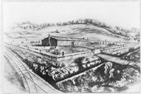
Civil War WI Roster Name: John H Penn Military: 30 September 1861 Wisconsin Residence: Spring Grove, Wisconsin Name: John H Penn , Residence: Spring Grove, Wisconsin Enlistment Date: 30 September 1861 Distinguished Service: DISTINGUISHED SERVICE Side Served: Union State Served: Wisconsin Unit Numbers: 3063 3063 Service Record: Enlisted as a Private on 30 September 1861 Enlisted in Company G, 13th Infantry Regiment Wisconsin on 30 September 1861. POW on 31 December 1864 at Paint Rock Bridge, AL:Cahaba Federal Prison Prisoner Exchange April 1865 Died 04 June 1865 in Nashville, TN Died of disease on 04 June 1865 in Nashville, TN (prob. from exposure to the cold flood waters - see''conditions'') The Nashville National Cemetery is located about six miles north of downtown, on Gallatin Road in Madison a short distance north of the Briley Parkway interchange. The 65.5-acre cemetery contains 33,258 interments, as of October 1997 (the cemetery is now in closed status). A very large proportion of the dead in the cemetery, however, were transferred from the hospital burial grounds in and around the city of Nashville and from temporary burial grounds around general hospitals in Nashville and nearby battlefields of Franklin and Gallatin, Tenn. Reinterments were also made from Bowling Green and Cave City, Ky. During the Civil War, if marked at all, wooden headboards with the names and identifying data painted thereon marked graves of those who died in general hospitals, on the battlefields, or as prisoners of war. Many of these headboards deteriorated through exposure to the elements. The result was that when the remains were later removed for burial to a national cemetery, identifications could not be established, and the gravesites were marked as unknown. Among the unknown, there were 3,098 white soldiers, 463 colored soldiers and 29 employees. Cahaba Prison Also known as Cahawba Prison Cahaba Federal Prison was located in an area near Cahaba (once known as Cahawba), Alabama on the banks of the Alabama and Cahaba Rivers. Once designated as a cotton warehouse, it held over 5000 Union soldiers between 1863 and 1865. The 16,000 foot prison was surrounded by a tall brick wall. Prisoners were contained in old decrepit buildings which held no provisions for bedding. Instead, prisoners slept on bare floors with one fireplace in the building to keep them warm. The water supply was an artesian well which had become extremely polluted by the sewer runoff from the town and the prison itself. According to stories told, the river often flooded and covered the floors of the buildings in waters running 1-4 feet deep. The commanding officer at Cahaba Prison was Captain H. A. M. Henderson. He was a Methodist minister. Due to his overseeing of this prison, prisoners were treated fairly and the death rate was extremely low in comparison to most other Civil War Prison Camps. Today, Cahaba is a ghost town. Archaeologists are working on uncovering the past of Cahaba Prison and town. It has become an important archaeological site as well as a place to visit and see the ruins. Conditions Estimates suggest that each man in the prison had only six square feet (0.6 m²) of living space (U.S. Army regulations at the time required that military posts allow at least 42 square feet (3.9 m²) of living space per soldier.) In late February 1865, heavy rains caused the Alabama River to flood the prison grounds at Cahaba. The water was so deep that on the morning after the high water reached the stockade, the Confederates in charge floated through the prison gate in boats. For four days and nights, prisoners were left to stand in waist-high freezing water. Guards finally allowed the prisoners to leave the compound to gather driftwood, which was stacked to form platforms for the men. John Walker, a private with the 50th Ohio Infantry, was one prisoner lucky enough to find a few pieces of heavy timber and cordwood, which he and seven comrades stacked high enough to clear the water. There they sat, back to back, for two days. Finally, 700 prisoners were taken to nearby Selma, while 2,300 waited in the flooded prison. Cooking was done by the prisoners themselves in the open area in the center of the prison yard. There was a single fireplace in the building and fires were sometimes built upon the earthen floor of the barracks. The firewood, when furnished at all, was either green sap pine or decayed oak from old fields. The daily rations for the prisoners consisted of 10 to 12 ounces (280 to 340 g) of corn meal (including ground cobs and husks), and five to seven ounces (140 to 200 g) of bacon or beef. But in the warm months, the meat rations often gave off such a nauseating smell that only a few of the men could force themselves to eat it. The sleeping arrangements consisted of rough bunks, without straw or bedding of any kind, under a leaky roof which extended out from the brick wall.. These bunks could accommodate only 432 men. The supply of water for drinking, cooking, washing, and bathing was conveyed from an artesian well along an open street gutter for 200 yards (200 m) into the prison. In its course the stream gathered the washings of Confederate soldiers and citizens, the slops of tubs, and the spittoons of groceries, offices, and hospitals. Prisoner Exchange With the approach of the end of the Civil War, H.A.M. Jones negotiated the exchange of Union prisoners from Cahaba for captured Confederates. This exchange took place at Vicksburg, Mississippi in April 1865. Once exchanged, many of the newly freed Union soldiers were placed on the extremely overcrowded steamship Sultana for the journey north. Unfortunately, the overburdened ship exploded, and many of the 1100 people that were killed were former Cahaba prisoners. located 14 miles southwest of Selma, off Highway 22 and County Road 9, at 9518 Cahaba Road, Orrville, Alabama. The Welcome Center is open daily from 9 AM to 5 PM. Phone: 334-872-8058 --- The regiment proceeded by way of Chicago, Quincy and the Hannibal and St. Joseph Railroad, to Weston, Missouri, thence marched to Leavenworth City, arriving on the 23rd of January. The regiment remained in camp until February 7th, when they began their march to Fort Scott, having been assigned to take part in General Lane's "Southwest Expedition." On the abandonment of the expedition, the 13th Wisconsin Volunteer Infantry, along with the 12th Wisconsin Volunteer Infantry, were ordered to march to Lawrence, Kansas. Shortly after arrival, the regiment was sent to Fort Riley for the purpose of joining an expedition to New Mexico. This expedition was also abandoned and the regiments were ordered to return to Leavenworth, where they arrived on May 28th. In a day or two, the regiments boarded transports and landed at Columbus, Kentucky on June 3rd. Here they were placed on railroad guard duty from Columbus to Corinth, on the Mobile and Ohio Railroad. While stationed here, Company D was detached from the regiment and sent to Hickman, Kentucky. Company G was detached from the regiment and sent to Smithland, Kentucky. Company G would rejoin the regiment in November, 1862 and Company D would rejoin the regiment in August, 1863. The balance of the regiment proceeded to Fort Henry in August. On September 2nd, they marched to Fort Donelson and entered upon garrison duty at that post. Joining an expedition to Clarksville on the 5th, about 900 rebels were encountered near Rickett's Hill. After a short skirmish, they were routed, and a large number of arms, horses, mules, and a large quantity of army stores were captured. The Thirteenth returned to Fort Donelson in the 8th, after a march of seventy miles. They remained at this place until the end of October. In the meantime the regiment engaged in frequent scouting through the surrounding country and exercised a general surveillance over the guerrillas and marauders in that neighborhood. In November, it joined the forces of General Ransom on the Tennessee River and proceeded on a fruitless expedition after the rebel Morgan to Hopkinsville. The command, however, had a brush with the rebel Woodward at Garretsville, in which that leader left 46 killed and wounded on the field, besides a large number of horses, guns, equipment, and 14 prisoners which were captured. Returning to Fort Donelson on the 11th, they moved the next day to Fort Henry and engaged in garrison duty. The marched a distance of over 160 miles on the campaign. In the latter part of December, the regiment took part in an expedition in pursuit of General Nathan B. Forrest. General Forrest was engaged in a raid on General Grant's communications into west Tennessee. The regiment returned without coming in contact with Forrest. The regiment guarded supply steamers between the Fort and Hamburg Landing. On February 3, 1863, news was received that Fort Donelson was attacked. The regiment was immediately en route to reinforce the garrison at that post. Driving the enemy's skirmishers before them, they reached the Fort in the evening, with a loss of one man wounded. The garrison, assisted by the gunboats, had successfully repulsed the enemy. The regiment remained at Fort Donelson during the summer, engaged in scouting and garrison duty, making occasional excursions after guerrillas and other rebel deprecators. Julius H. Carpenter and Jacob B. Mereness, of Company C, were murdered by guerrillas near the Fort on August 22nd. On August 1st, Colonel Maloney was recalled to take command of his company in the Regular Army and Captain William Penn Lyon, of the 8th Wisconsin Volunteer Infantry, was commissioned as Colonel and soon after assumed command of the regiment. On August 27th, the regiment left Fort Donelson, marching by way of Columbia, Tennessee, and arrived at Stevenson, Alabama on September 14th, a distance of 260 miles. Here Colonel Lyon was placed in command of the post and the troops there stationed. At this time, Stevenson was the depot of supplies for the Army of the Cumberland, which had just entered on the campaign which resulted in the repulse at Chicamauga. After that battle, and the troops had gathered under the shelter of the Union guns at Chattanooga, the enemy busied himself in cutting off the supplies necessary to support the troops in that position. This fact made Stevenson an important post - its capture would have compelled the surrender of the brave remnant of Rosecrans' army, or the falling back of the whole Union force towards Murfreesboro, Tennessee. At that time, the Tennessee River was very low and easily fordable at many points, and the garrison was very small, with but a little artillery. Fortunately, the attention of the enemy was directed to other points, and no attack was made on the depots at Stevenson. The XI and XII Corps, under General Hooker, arrived from the Army of the Potomac and secured the safety of the post. The Confederate General Wheeler succeeded in destroying the communications with Nashville, so that the supplies at Stevenson were entirely exhausted and the army at Chattanooga was in imminent danger of starvation. This was a very dark period in the history of the National conflict, which was not fully appreciated by the people at the time. Colonel Lyon and his command fully understood the responsibility of their position, and felt that the safety of the whole army depended upon their vigilance, energy, and bravery. The regiment joined the brigade to which it belonged at Nashville in the later part of October and went into winter quarters at Edgefield. Here it was employed in picket and guard duty until February, 1864. More that three-fourths of the men reenlisted and the regiment proceeded to Wisconsin on veteran furlough. The regiment arrived at Janesville, Wisconsin on February 18th, and they were warmly welcomed by the local citizens who had assembled to greet them. The regiment reassembled at Camp Utley in Racine on the expiration of the thirty days' furlough and arrived at Nashville on March 31st. They encamped at Edgefield and engaged in garrison duty and guarded the railroad from Louisville to Chattanooga. Here they were assigned to the First Brigade, Fourth Division, XX Corps and formed part of the force designed to operate against Atlanta. But their destination was changed, and the brigade was assigned the duty of guarding the Tennessee River between Stevenson and Decatur. About the end of April, the regiment moved to Stevenson, where Colonel Lyon was placed in command of the post. Companies B, C, E, H, and K were stationed along the tow railroads which crossed here, while the other companies were doing post and garrison duty at Stevenson and guarding General Sherman's supply trains to Dalton, Georgia. On June 4th, the regiment marched to Claysville, Alabama, where the companies and detachments of companies were distributed along the bank of the Tennessee River for 40 miles, picketing and patrolling might and day, while the Confederates were engaged in similar duty on the opposite side. Earthworks and blockhouses were erected and every precaution taken to prevent the enemy from crossing the river and interrupting Sherman's communications. Frequent raids were made across the river, capturing prisoners and seizing Confederate stores and several severe skirmishes occurred with the rebel outposts and guerrillas. On September 1st, the regiment, with the exception of Company C (which was left at Gunter's Landing), marched hastily to Woodville to prevent the destruction of the Memphis and Charleston Railroad between Huntsville and Stevenson by Wheeler's cavalry. On September 3rd, they moved by railroad to Huntsville, where Colonel Lyon was placed in command of all troops and railroad defenses from Huntsville to Stevenson, a distance of sixty miles, with orders to hold the railroad and prevent it from being broken at all hazards. Lieutenant Colonel Chapman was placed in command of the regiment. On the 14th, several companies were scattered along the road, with headquarters at Brownsboro. Work was immediately commenced strengthening the defenses, erecting stockades at the bridges, patrolling the road, and other duties, tending to insure the safety of the trains. The regiment was absent a short time at Decatur during the month. On their return, they drove off a detachment of Forrest's cavalry, who were engaged in burning the railroad track. During most of the summer, and into September, much sickness prevailed in the regiment. Leaving the convalescents to hold the positions along the railroad, the regiment march to Larkinsville, Alabama on October 1st, to keep open communications with General Steadman's train of reinforcements for Huntsville. This was done because General Forrest attacked that city. Returning to Brownsboro they moved to Huntsville, removing the obstructions which Forrest's men had thrown into the railroad cuts, and quartered in the court house. Forrest having retreated, they returned the next day to their positions on the railroad. On the 24th, Captain Blake, commanding the able bodied men, moved to Decatur to assist in its defense. They were attacked by General Hood and two men were slightly wounded. On November 23rd, most of the able bodied men, under Lieutenant Cobb, proceeded to New Market. There they dispersed the 4th Alabama Cavalry, destroyed their camps and provisions, and killed or wounded 13 Confederates. On November 25th, General Hood crossed the Tennessee River in force and moved directly to Nashville. General Granger was ordered to concentrate all the troops in northern Alabama at Stevenson and fortify it. In pursuance of this order, northern Alabama was evacuated by the Union forces and heavy trains of government property were dispatched over the road to Stevenson. With the balance of General Granger's command, the regiment marched to Stevenson, where they were immediately set to work constructing stockades and earthworks to prevent Hood's retreat, should he attempt to do so, or to enter east Tennessee. Remaining here until Hood's defeat at the battle of Nashville, the regiment returned to Huntsville and resumed their duties on the railroad. They set to work repairing and rebuilding those defenses that had been destroyed by the rebels. On December 31st, Company G, stationed at Paint Rock Bridge, was suddenly assailed by about 400 Confederates and Lieutenant Wagoner and 35 men were captured and two men were severely wounded. (This is where John was captured) One hundred and sixty of the non-veterans, including the Lieutenant Colonel and several officers, were mustered out on the expiration of their term of service. Major Thomas O. Bigney was promoted to Lieutenant Colonel on November 21st, but he was subsequently mustered out on the expiration of his term of service. On January 6, 1865, Captain August H. Kummel was appointed Lieutenant Colonel. On February 15th, Captain Charles Noyes was appointed Major. In February, Company C and G were stationed on picket and patrol duty at Gunter's Landing on the Tennessee River. Here Lieutenant Loucks, of Company C, crossed the river with a few men and skirmished with Pete White Cotton's band of guerrillas. Lieutenant Loucks's men captured several prisoners, and in a personal encounter killed their infamous leader. On March 20th, the regiment was assigned to the Second Brigade (Brigadier General Beatty), Third Division (Major General T. J. Wood), IV Army Corps (Major General Stanley). Colonel Lyon resumed command of the regiment. The detachments were called in and the regiment proceeded by rail to Knoxville. The regiment was on their way to Virginia. They marched by way to New Market and Bull's Gap to Jonesboro and remained encamped there until April 20th, when they received the news of Lee's surrender and President Lincoln's assassination. The Corp was ordered back to Nashville. On the 20th, the regiment left Jonesboro and proceeded to Nashville by the way of Chattanooga. They arrived in Nashville on the 22nd and went into camp. Here those men whose terms of service expired by October 5th were discharged. A considerable number of the 24th Wisconsin Volunteer Infantry was assigned to the regiment to complete their term of service. On June 16th, with the rest of the division, the regiment proceeded by way of Johnsville and the Tennessee, Ohio and Mississippi Rivers, to New Orleans and went into camp at Chalmette. In July, the regiment embarked for Texas and arrived at Indianaola on the 14th. Proceeding with the brigade to Green Lake, the regiment suffered severely from the long march of 24 miles, the scarcity of water and other hardships. They remained in this camp until September 11th, having suffered much from sickness produced by the heat of the climate and the lack of a vegetable diet. Many died here who had gone through the whole war without being sick. On the 11th, the brigade started on a march of 145 miles to San Antonio. The heat at starting was excessive, towards night a storm arose and the temperature changed. The men suffered severely from the chill and many where left the next day in the hospital. Arriving within seven and a half miles of San Antonio on September 24th, the brigade went into camp and remained until orders came in November to muster out the regiment. The papers were made out, and on the 24th the men were mustered out and ordered to proceed to Madison to be discharged from service. Colonel Lyon's term of service expired on September 10th, so he left the regiment and the command devolved to Major Noyes. On October 9, 1865, commissions were issued to Lieutenant Colonel Kummel as Colonel, Major Noyes as Lieutenant Colonel, and Captain Cobb as Major, but neither of them could be mustered into service. Desiring to remain in Texas, Major Noyes resigned the command to Captain Cobb. On November 27th, the regiment began its march to Indianola, 160 miles, where they embarked on a steamer, reached New Orleans on December 13th, steamed up the Mississippi, and reached Madison on the 23rd. The regiment was discharged from the United States service on December 26, 1865. Though the 13th Wisconsin Volunteer Infantry had not been called to take part on the field of battle, the duties which it performed have been just as important, for it is to the faithfulness of its sentinels, that an army owes much that it achieves on the battlefield. With its supplies cut off, its communications closed, an army is often defeated. It is then that the faithfulness and vigilance if the regiment, who guards the trains and keeps the enemy at a distance from the highways by which supplies reach the army in an enemy's country, begins to be appreciated. The regiment held many important positions on which the success and welfare of Sherman's whole army depended. Ceaseless vigilance and stern fidelity characterized the operations of the regiment. While others may pride themselves upon the achievements in the field, this regiment may point with pride to its four years of service, as being one of the material elements in the success of the armies of the Union, whose communications and flanks it was called upon to protect. Regimental Statistics - Original strength, 970. Gain - by recruits in 1863, 169, in 1864, 2122, in 1865, 33; by substitutes, 33; by draft in 1865, 72; by veteran reenlistments, 392; total 1,931. Loss - by death, 183; missing, 3; deserted, 71; transferred, 6; discharged, 321; mustered out, 797. All the information on this page was taken from The Military History of Wisconsin: A Record of the Civil and Military Patriotism of the State in the War for the Union, by E. B. Quiner, Esq. -- Organized at Janesville, Wis., and mustered in October 17, 1861. Left State for Leavenworth, Kansas, January 13, 1862. Attached to Dept. of Kansas to June, 1862. District of Columbus, Ky., Dept. of the Tennessee, to August, 1862. Garrison Forts Henry and Donelson, Tenn., to June, 1863. 1st Brigade, 3rd Division, Reserve Corps, Dept. of the Cumberland, to October, 1863. Post and District of Nashville, Tenn., Dept. of the Cumberland, to January, 1864. 1st Brigade, Rousseau's 3rd Division, 12th Army Corps, Army of the Cumberland, to April, 1864. 1st Brigade, 4th Division, 20th Army Corps, Dept. of the Cumberland, to March, 1865. 3rd Brigade, 3rd Division, 4th Army Corps, to August, 1865. Dept. of Texas to November, 1865. SERVICE.-March to Fort Scott, Kansas, March 1-7, 1862, and duty there till March 26. Ordered to Lawrence, Kansas, March 26, thence to Fort Riley April 20 and to Fort Leavenworth May 27. Moved to St. Louis, Mo., thence to Columbus, Ky., May 29-June 2. Guard duty along Mobile & Ohio Railroad from Columbus, Ky., to Corinth, Miss., till August. Moved to Fort Henry, Tenn., thence to Fort Donelson, Tenn., September 2 and garrison duty there till November 11. Expedition to Clarksville September 5-10. Action at Rickett's Hill, Clarksville, September 7. Hopkinsville, Ky., November 6. Moved to Fort Henry November 11, and duty there as garrison and guarding supply steamers between the Fort and Hamburg Landing till February 3, 1863. Moved to relief of Fort Donelson February 3. Duty at Fort Donelson till August 27. March to Stevenson, Ala., August 27-September 14 and duty there guarding supplies till October. Moved to Nashville, Tenn., and duty there till February, 1864. Veterans on furlough February-March. Return to Nashville March 28. Garrison duty and guarding railroad trains from Louisville to Chattanooga till April 26. Guard duty along Tennessee River between Stevenson and Decatur till June. Moved to Claysville, Ala., June 4. Picket and patrol duty along Tennessee River till September. Scout from Gunter's Landing to Warrenton July 11 (Co. "C"). March to Woodville, thence to Huntsville, Ala., and guard Memphis & Charleston Railroad from Huntsville to Stevenson, Ala., with headquarters at Brownsboro till November. Repulse of Hood's attack on Decatur, October 26-29. At Stevenson till December. At Huntsville till March, 1865. *** (John taken Prisoner)Paint Rock Ridge December 31, 1864 (Co. "G"). Operations in East Tennessee March 15-April 22. At Nashville, Tenn., till June. Ordered to New Orleans June 16, thence to Indianola, Texas, July 12. Duty at Green Lake and San Antonio, Texas, till November. Mustered out November 24, 1865. Regiment lost during service 5 Enlisted men killed and mortally wounded and 188 Enlisted men by disease. Total 193. |
Media
 Multimedia Object | Cahaba Prison,Cahaba Alabama
Format: jpg Image Dimensions: 591 x 386 Type: photo |
Multimedia Object | 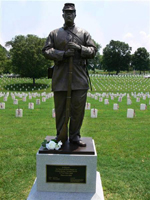 Nashville National Cemetery, Nashville, TN Nashville National Cemetery, Nashville, TN
Format: jpg Image Dimensions: 450 x 600 Type: photo |
 |
Family with Parents - [View Family (F9977)] |


Research Assistant
| There are no research logs attached to this individual. |